
Choosing Bamboo Species for Your Site and Purpose
Updated: Oct 5
Choosing bamboo means matching a plant to a place and a purpose. An impressive photograph, a large maximum height or success in another country is not enough to establish that a species suits your project.
Prepare a site profile before comparing planting material. This gives growers and advisers the information needed to discuss a realistic shortlist.
1. Define what you want the bamboo to do
For a collection or landscape, priorities may include appearance, available space and the type of maintenance you can provide. For a commercial plantation, begin with the intended product and the requirements of potential users or processors.
A project intended to supply poles may need different material and management from one intended for another use. Write down the required characteristics and identify which are confirmed by a buyer and which remain assumptions. Compare a shortlist using the same headings: intended use, climate evidence, soil and water needs, growth habit, planting-material identity and trial results.
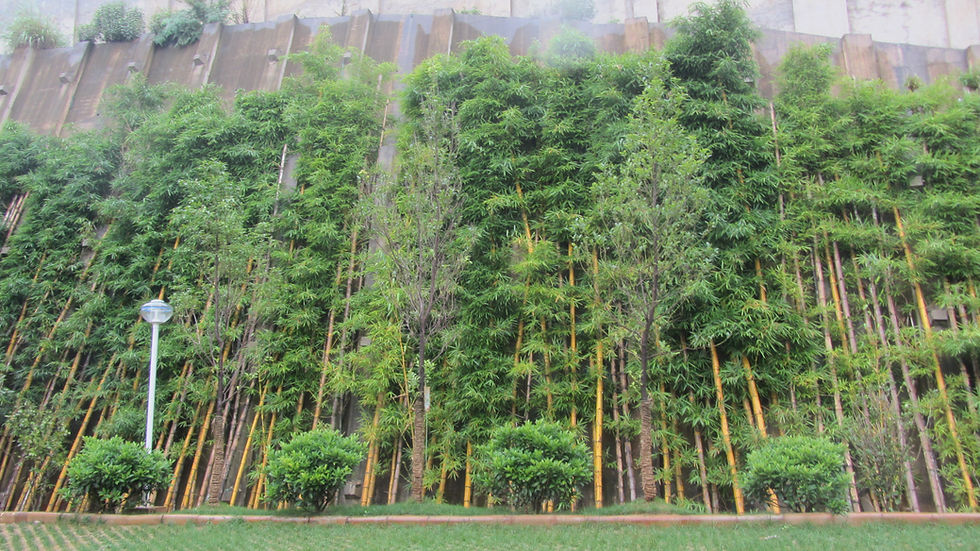
A landscape planting illustrates one use to consider when choosing bamboo.
2. Describe the climate, including difficult periods
Record the location and elevation, temperature range, rainfall pattern and length of dry periods. Include exposure to wind and any known extremes, rather than relying only on annual averages.
Ask how closely these conditions match the evidence available for a candidate species. A nursery observation from one location is useful context, but it does not establish performance under every climate.
3. Assess soil, drainage and water
Describe the soil, depth, slope and drainage. Identify areas that remain wet after rain and the water available during establishment and dry periods.
Consider access as part of the growing site. Teams need to bring in planting material, inspect plants and carry out management. A promising species does not remove a site's practical limitations.
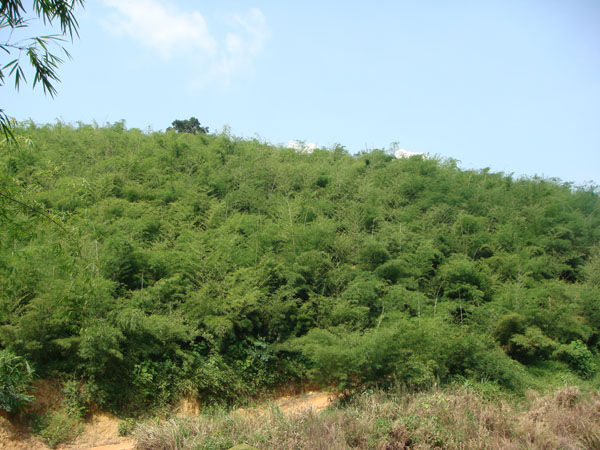
A hillside bamboo stand from the training archive. Local site evidence is needed before selecting a species for another location.
4. Check growth habit and available space
Review whether the bamboo forms a clump, extends through a running rhizome system or has another growth form. Consider its relationship to boundaries, paths, infrastructure and neighbouring plantings.
For a commercial project, allow for both plant development and the operations needed around it. Spacing should follow the species, product goal, site and management plan, rather than a universal distance.
5. Verify the planting material
Confirm the botanical name or the identification information available. Ask about the source and form of planting material: seeds, nursery plants or vegetatively propagated stock.
For seed orders, review the batch information and current availability. For plants, discuss the supplied form, quantity and condition expected at delivery. Resolve destination-specific supply arrangements before committing to a planting date.
You can explore our species profiles, bamboo seeds and bamboo plants as starting points for that discussion.
6. Trial before expanding
Where the species is unfamiliar under your conditions, plan a manageable trial before a large commitment. Label the material, document the site and record survival, new growth and management inputs.
Decide in advance what the trial needs to demonstrate. Establishment is one question; suitability for an eventual product is another. Keep track of problems as well as promising results, and avoid drawing conclusions from only the best-looking plants.
Information to send for a species discussion
Country, location and elevation.
Temperature range, rainfall pattern and water access.
Soil, drainage, slope and exposure.
Planting area and intended use.
Preferred species, if any, and the evidence behind that preference.
The people and resources available to manage the planting.
For a commercial project, read our commercial bamboo farming guide. For help comparing species and project conditions, explore Yunnan Bamboo consultancy.
Related guides
Sources
Adapted from the bamboo training course supplied by Yunnan Bamboo, credited in the slides to Prof. Tan Hongchao. Lecture 5, slides 3–6; Lecture 1, slides 10–21; and the existing plantation planning page.

Comments